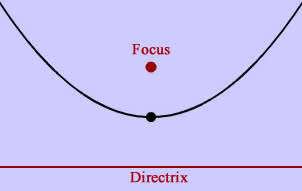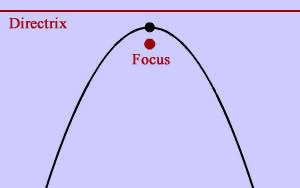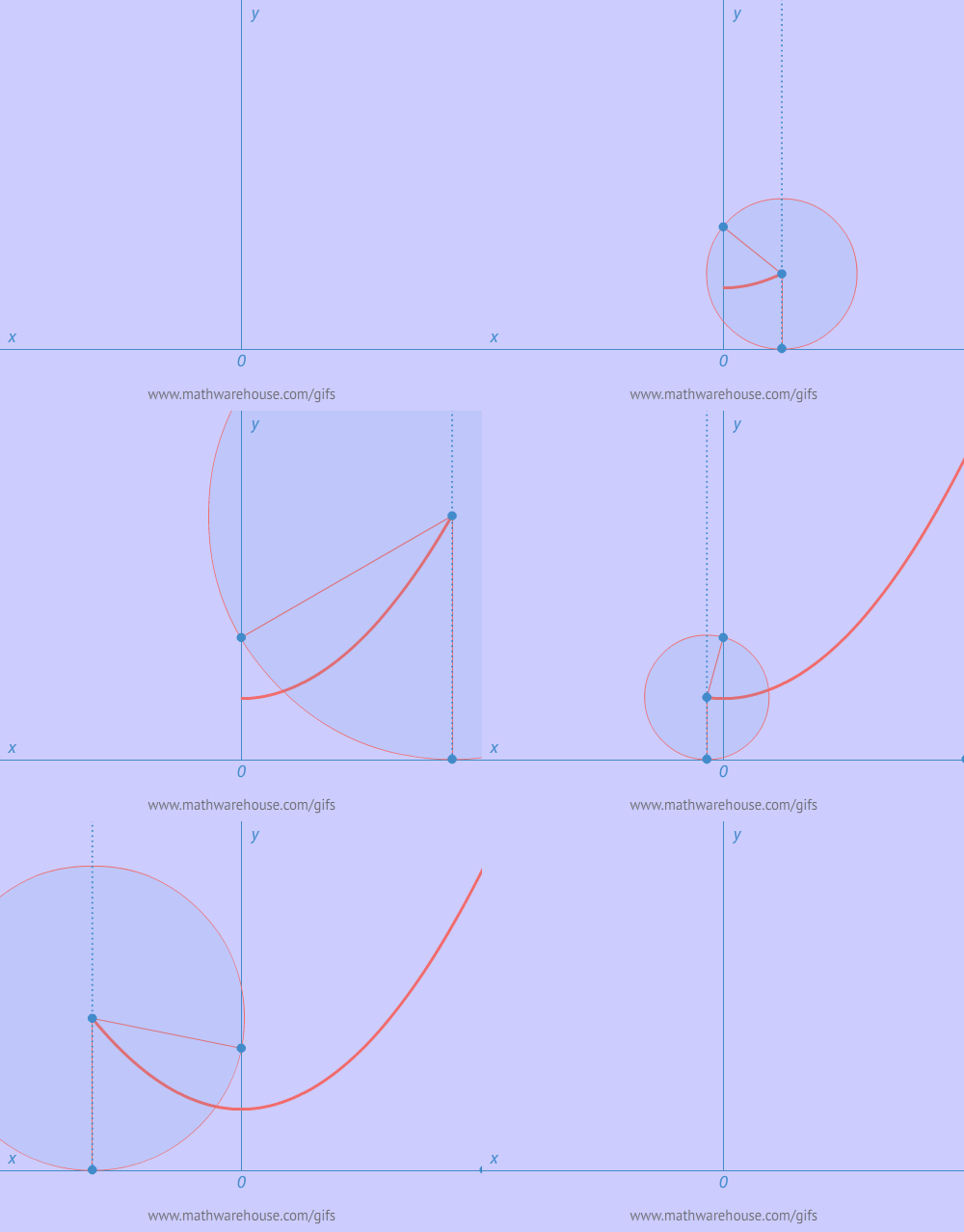
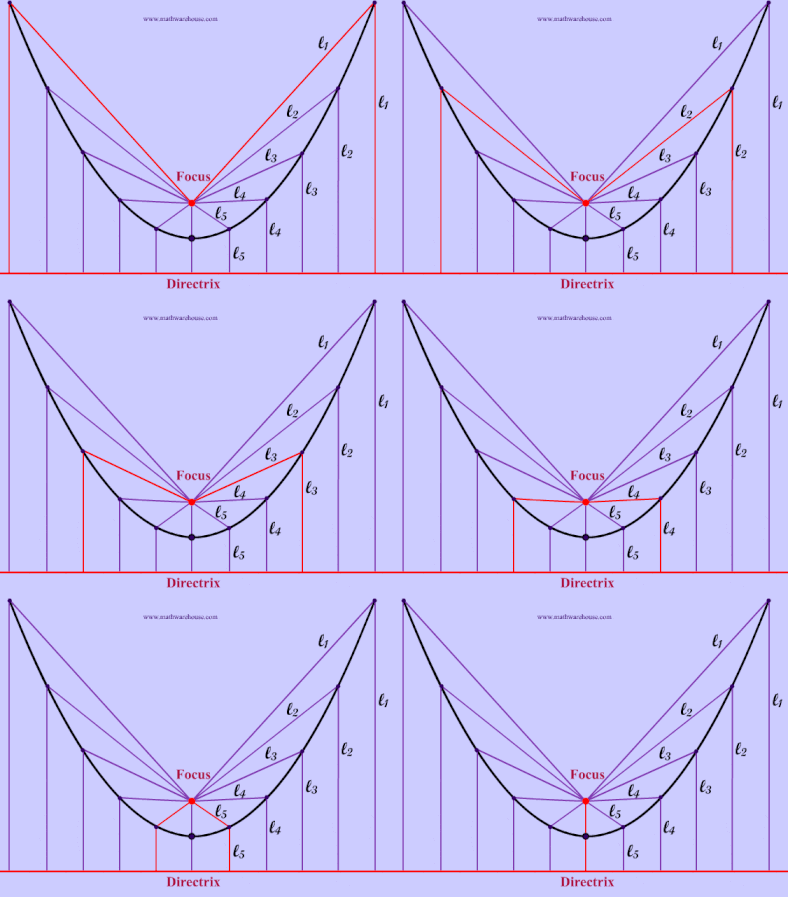
A parabola is a locus of points equidistant from a single point, called the focus of the parabola, and a line, called the directrix of the parabola. It's easiest to understand this concept by examining the pictures below.
The red point in the pictures below is the focus of the parabola and the red line is the directrix. The parabola is made up of all the points that are equidistant from the focus and the directrix . (See picture on the right to understand this idea of equidistance)
. As you can see from the diagrams, when the focus is above the directrix (left picture) the parabola opens upwards.
Locus of points from Focus /Directrix
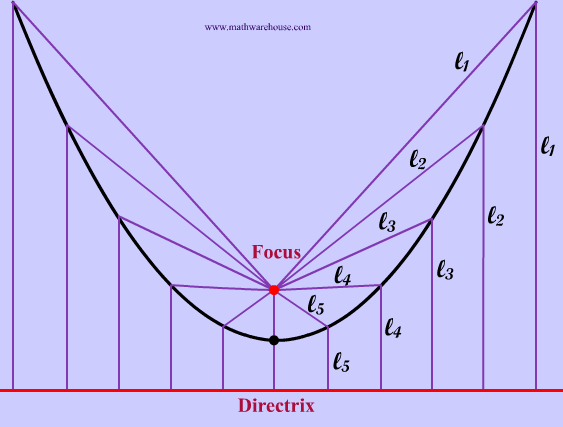
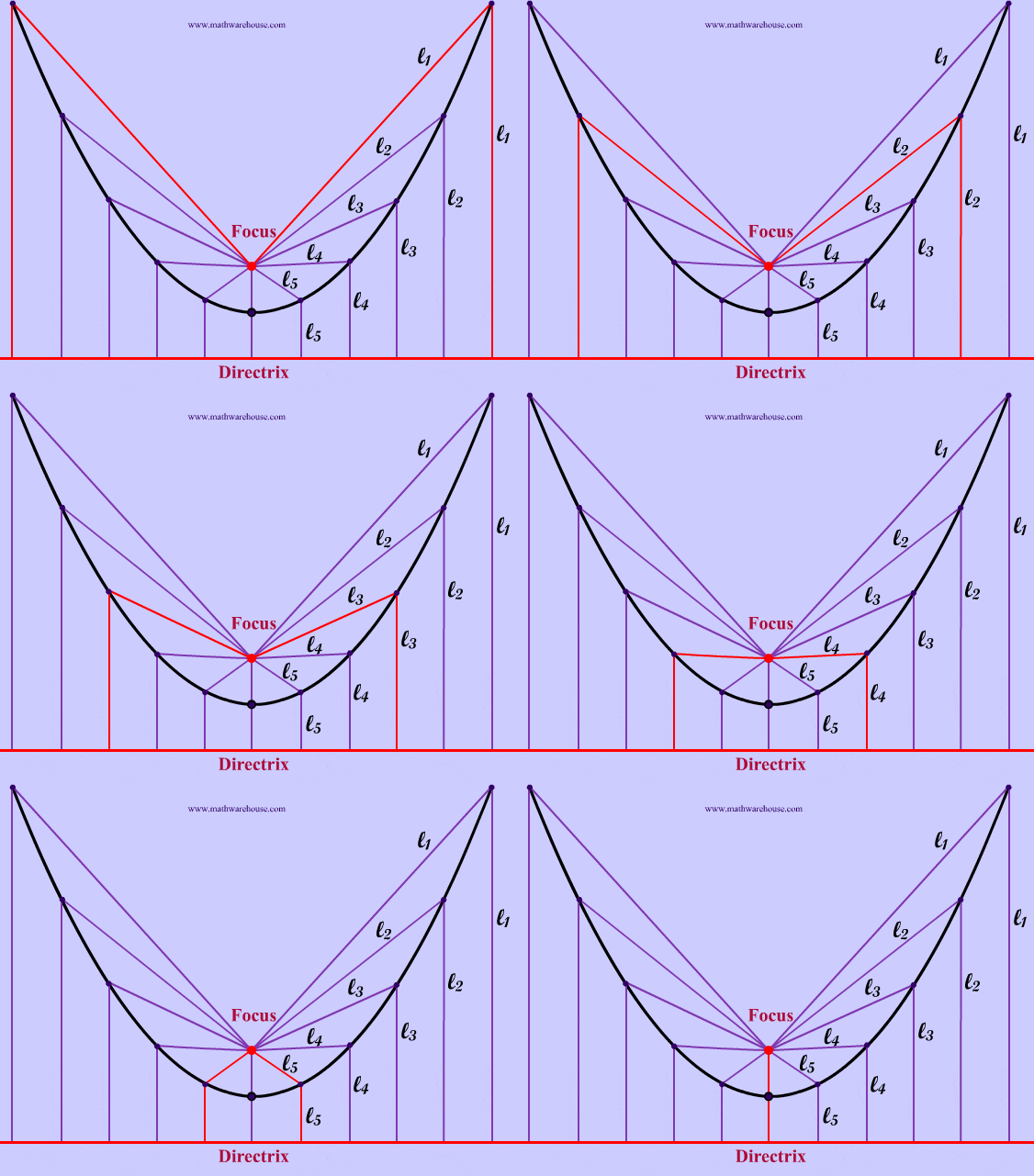
The purple lines in the picture below illustrate the distance from the parabola to the focus and to the directrix. As you can probably tell from just looking at the picture, any point on the parabola must be just as far away from the directrix and from the focus .
In other words, line l1 from the directrix to the parabola is the same length as l1 from the parabola back to the focus. The same goes for all of the other distance from a point on the parabola to the focus and directrix.
How focus and Directrix relate to graph
You probably know that the smaller |a| in the standard form equation of a parabola, the wider the parabola. In other words y = .1x² is a wider parabola than y = .2x² and y = -.1x² is a wider parabola than y = .-2x² . You can understand this 'widening' effect in terms of the focus and directrix. As the distance between the focus and directrix increases, |a| decreases which means the parabola widens. See the pictures below to understand
|a| = 1
|a| = .6
|a| =.3
|a| = .2
Focus and Directrix Applet
Explore how the focus and directrix relate to the graph of a parabola with the interactive program below.