|
|
Interior & Exterior Angles and sidesProperties of Triangles
Triangles are one of the most fundamental geometric shapes and have a variety of often studied properties relating to their
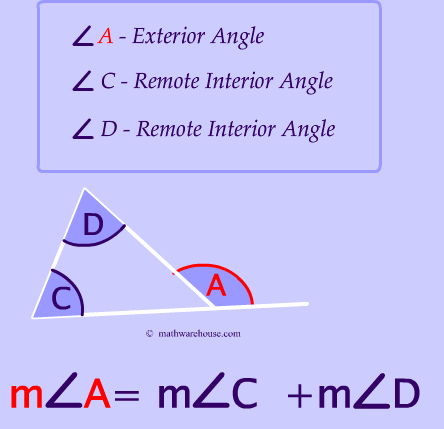
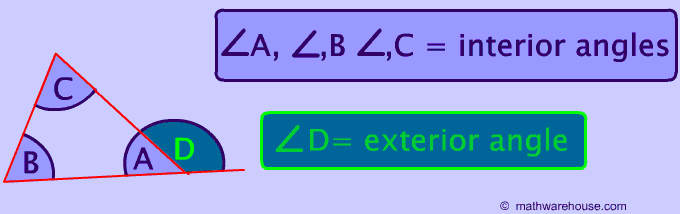
This question is answered by the picture below. You create an exterior angle by extending any side of the triangle. Web page on the relationship between exterior and interior angles of a triangle
Interior Angles of a Triangle Rule
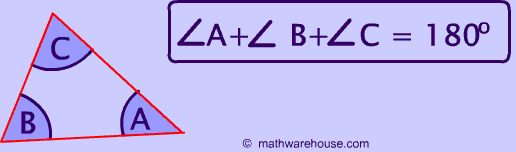
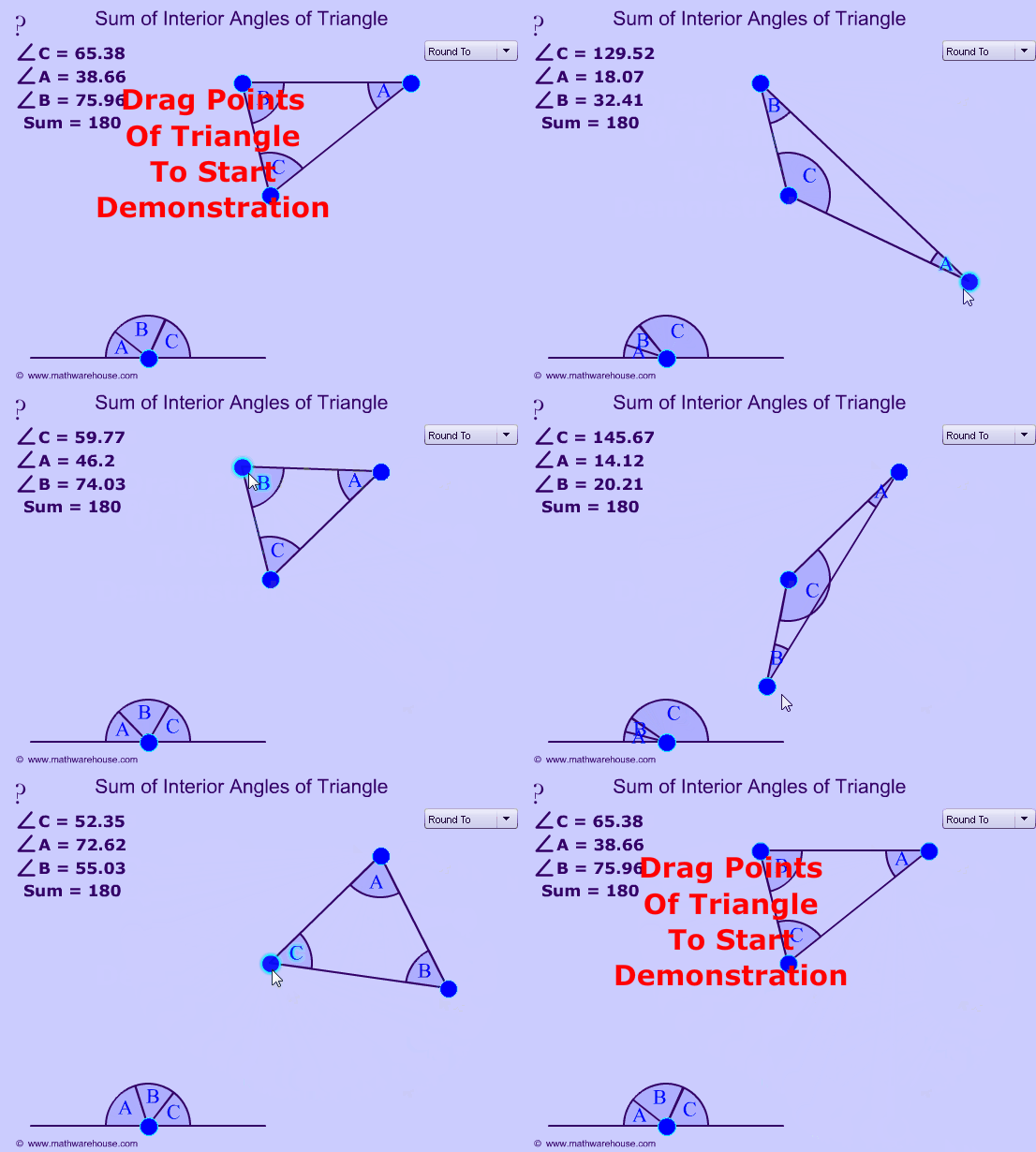
This may be one the most well known mathematical rule--The sum of all 3 interior angles in a triangle is 180°. As you can see from the picture below, if you add up all of the angles in a triangle the sum must equal 180°. This property of a triangle's interior angles is simply a specific example of the general rule for any polygon's interior angles.
To explore the truth of this rule, try Math Warehouse's interactive triangle, which allows you to drag around the different sides of a triangle and explore the relationship between the angles and sides. No matter how you position the three sides of the triangle, the total degrees of all interior angles (the three angles inside the triangle) is always 180°. Practice Problems on Interior Angles of a Triangle Rule
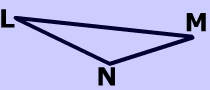
What is m $$ \angle $$ LNM in the triangle below?
![]() $$ \angle $$ LMN = 34° $$ \angle $$ MLN = 29° A triangle's interior angles are $$ \angle $$ HOP, $$ \angle $$ HPO and $$ \angle $$ PHO. $$ \angle $$ HOP is 64° and m$$ \angle $$ HPO is 26°. What is m$$ \angle $$ PHO?
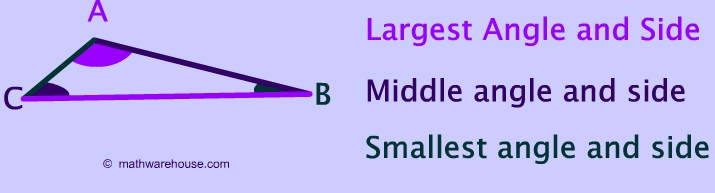
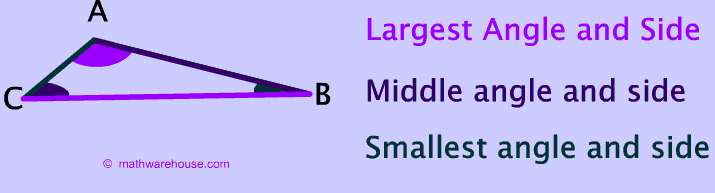
To explore the truth of the statements you can use Math Warehouse's interactive triangle, which allows you to drag around the different sides of a triangle and explore the relationships betwen the measures of angles and sides. No matter how you position the three sides of the triangle, you will find that the statements in the paragraph above hold true.(All right, the isosceles and equilateral triangle are exceptions due to the fact that they don't have a single smallest side or, in the case of the equilateral triangle, even a largest side. Nonetheless, the principle stated above still holds true. !)
|