**Demonstrations of Reflections in Math


A+    A−    B  
Home
Algebra
Math Games
Geometry
Private Tutors
Interactive
Trigonometry
Jobs
Teacher Resources
On Facebook


AddThis Social Bookmark Button

Prime Number definition, examples

How to determine if number is prime, common misconceptions

Definition: A prime number is a number whose only factors are 1 and itself. That means there is no whole number that evenly divides the prime number.

    Some often-confused facts about prime numbers

  • Zero is not a prime a number
  • The number one, 1, is also not a prime number. Although the definition of a prime number seems to apply to 1, you have to count 1 twice --sorry no 'double dipping' for prime numbers. 1 is not prime.
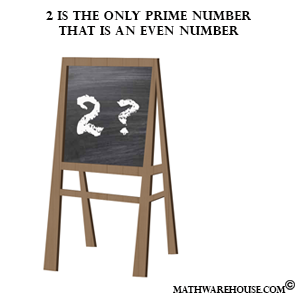
  • The only even prime number is 2, because all of the other prime numbers are multiples of 2 and therefore violate the definition of a prime number (only divisible by 1 and itself)
To determine whether or not a number is prime all that you have to do is find any integer that evenly divides the number in question (not counting 1 and the given number). Use Math Warehouse's Calculator to determine if any number is prime.

Top
AddThis Social Bookmark Button