Some often-confused facts about prime numbers
- $$ 0 $$ (zero) is not a prime a number.
- $$ 1 $$ is also not a prime number. Although the definition of a prime number seems to apply to 1, you have to count 1 twice -- sorry no 'double dipping' for prime numbers. 1 is not prime.
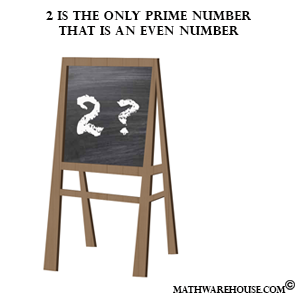
- $$ 2 $$ . The number two, $$ 2$$, is the only even number that is prime, because all of the other even prime numbers are multiples of 2 and therefore violate the definition of a prime number (only divisible by 1 and itself).
- Read more about how to determine if a number is prime.